Concrete Patio Construction in Pasadena CA - a slab built on solid, packed ground
Old patio cracked and sinking, or just bare dirt out back? We dig out, pack the base and pour a slab that sheds water.
What goes into building a concrete patio in Pasadena?
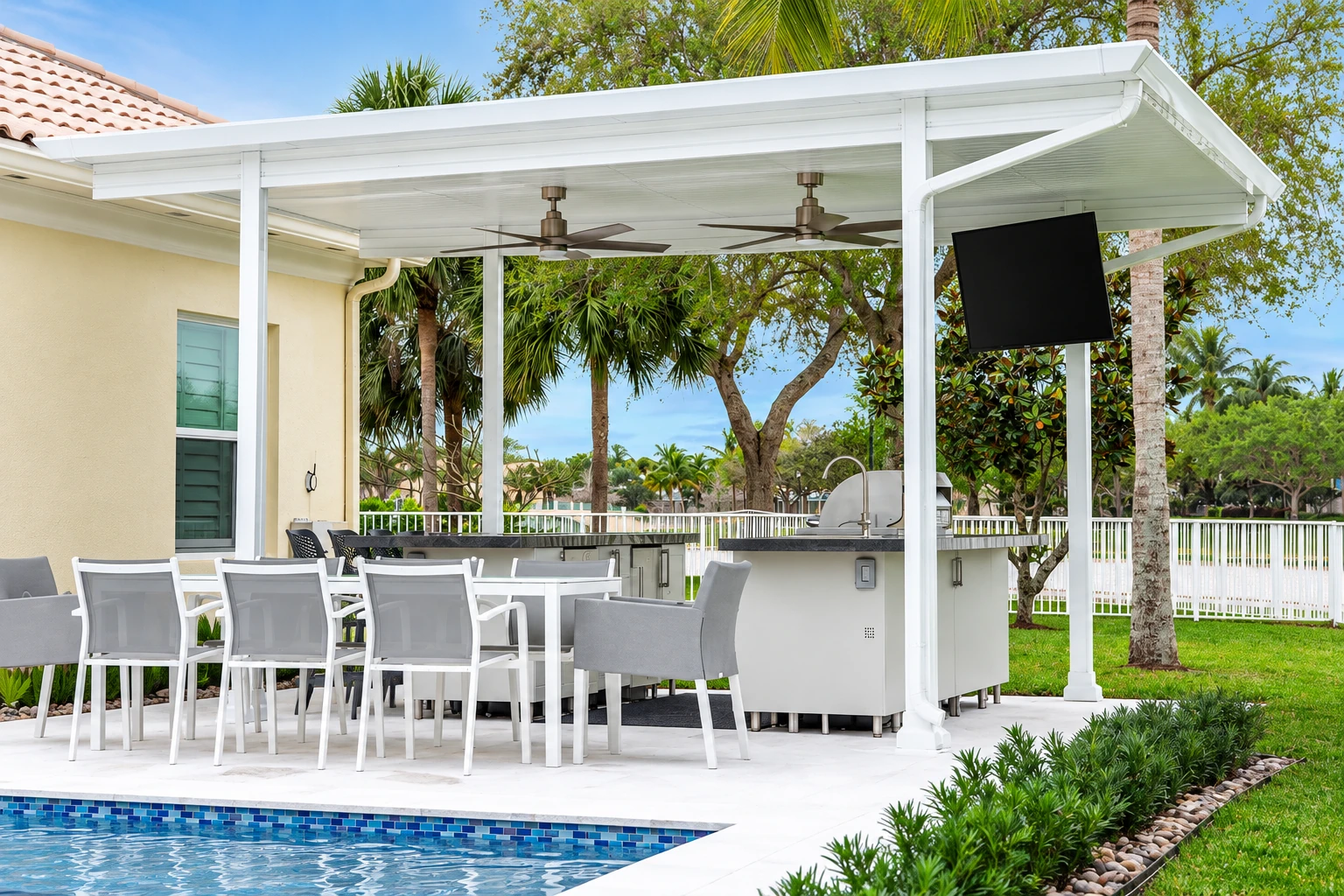
Building a concrete patio in Pasadena is flatwork, which is what we call any flat pour like a patio, walk or driveway. We dig out the old slab or dirt, build a packed base, then form, pour and finish a slab that sheds water away from your house, and the part that decides how long it lasts happens before any concrete shows up.
Most people call us with an old slab that's cracked, sunk at one corner or holding water by the back door, or with a bare patch of yard they want to use. The price moves with the size and shape, how much old concrete and dirt has to come out and be hauled off, the base work, and the finish, from a plain broom texture to stamped concrete. The schedule turns mostly on the digging, the permit question and the weather, and if your patio needs a permit, we sort out who's pulling it before we start and put that in writing. We're based in Pasadena and pour patios across the cities around it, and when I come out you get a written estimate that spells out what I'd do and why.
How can you tell your patio needs replacing?
Most patios we replace show the same few problems, and nearly all of them start underneath the slab rather than on top. Here's what to look for.
Cracks that keep getting wider or step up at one edge usually mean the ground underneath has moved.
Water that pools on the slab or runs toward your house after rain points to the wrong slope.
A corner or section that has sunk below the rest usually sits on dirt that was never packed.
A top that chips or turns dusty when you sweep often means it was poured in midday heat.
Uneven edges where the slab meets steps or a walk become trip spots and usually mean one side settled.
A smooth surface that gets slick when it's wet needs a rougher finish so nobody slips.
If water's running toward your house or a sunken edge has someone tripping, call us rather than waiting, because both problems usually get worse.
What happens after you call about a patio?
Here's how a patio job runs with us, from your first call to the day I walk the finished slab with you. I'm the one you'll see at every step.
Call or send the form
Call (626) 345-7318 or send the form, and we set up a time for me to come out and see the space. You'll deal with me from the first visit, not a salesperson.
I come out and measure
I measure, ask how you'll use the patio and show you where the joints would go and where the water will run. You get a written estimate that lays out the tear-out, the base, the finish and the price, so you know what you're paying for before anything starts.
We prep, form and pour
Once you say go, we settle the permit question, then dig out, pack the base and set the forms. Our crew does the work, and I'm on site running the job through the pour.
Finish, cure and walk through
We finish the top, put in the joints and let the slab cure, which is the wait while the concrete gains strength before it takes weight. When it's done, I walk the patio with you and go over when it's ready to use.
Get a written estimate for your Pasadena patio
We reply within one business day to set a time, then I come out, measure and give you a free written estimate on site. There's no obligation, so take your time deciding.
- Call
- (626) 345-7318
- Hours
- Mon–Fri: 8 AM–11 PM, Sat–Sun: 6 AM–10 PM
Base, joints and finish on a concrete patio
The subgrade, the ground the slab sits on, matters most. We dig out the soft dirt and roots, bring in base rock and pack it down, then check where water runs so the slab falls away from your house. Rebar, the steel set inside the slab, helps hold it together, but a slab poured over raked dirt is far more likely to settle and fail no matter how much steel is in it.
When a budget gets tight, people want to cut the base and keep the nice finish, because the base is buried the day we pour. I'd do it the other way around. A plain slab on a good base holds up better than a fancy one on dirt, and you can't fix what's underneath without tearing the patio out.
A broom finish is the usual choice for a patio, because brushing the surface before it hardens leaves a fine texture that grips when it's wet. Control joints are grooves we tool in while the concrete's wet or saw in once it's hard, and they give the slab a straight line to crack along instead of a random one. If you want a path out to the patio, a new concrete walk can usually be poured on the same job.
Concrete patio questions from Pasadena homeowners
How much does a concrete patio cost in Pasadena?
Your price comes from the written estimate after I've measured, because the size, the tear-out and hauling, the base work and the finish set the cost. A plain broom finish on a simple rectangle costs the least, while curves, steps, a pattern or color, and a yard that needs digging out or reshaping to drain all add to it. The base is the last place I'd cut.
How long will I be without my patio while it's replaced?
You'll be off the patio from tear-out until the new slab has cured, and the dig, the base work and the weather decide how long that stretch runs. I'll go over the timing with you when I come out to measure, including when you can walk on it and when the furniture can go back.
Is some cracking normal in a new concrete patio?
Yes, industry guidance on slabs says every owner should be told some cracking is normal on every project, so a few fine cracks in a new patio are expected. The joints I mentioned are there so most of those cracks land in the grooves where they don't stand out, and a packed base keeps them from opening up or stepping.
How much can I pay up front for a patio in California?
California's Contractors State License Board caps the down payment on a home improvement job like a patio at $1,000 or 10 percent of the contract price, whichever is less. After that, each payment should follow work done or materials delivered, and the state wants those payments listed clearly in the contract, so read that list before you sign.
Can an unlicensed worker build my patio in Pasadena?
Not if the job needs a permit or hired help, because the state's minor work exemption from licensing tops out at $1,000 and only covers work that needs neither. A patio built by a crew calls for a contractor licensed by the board for concrete work, which covers forming, pouring and finishing flatwork, whatever the job costs. We're licensed and fully insured.
How do I find out if my patio needs a permit in Pasadena?
Ask the city's Permit Center, which takes permit and inspection questions at (626) 744-4200 or permit_center_manager@cityofpasadena.net. Work in the public right of way, the strip along the street, goes through the city's Public Works permitting office, and any contractor pulling a Pasadena permit has to show a City of Pasadena business license.
Related concrete work around your patio
Stamped concrete services
If you want your patio to look like stone, brick or slate without the gaps that weeds grow through, stamped concrete puts the pattern in the slab.
Concrete sidewalk building
A new patio is easier to reach with a path from the driveway or back door, and pouring the walk at the same time keeps the levels matched.
Get your patio measured and priced
Call (626) 345-7318 or use the estimate form and send the rough size, where it sits on the lot and a few photos of the ground, so I show up ready to talk through your options.
Mon–Fri: 8 AM–11 PM, Sat–Sun: 6 AM–10 PM