Slab foundation building in Pasadena CA - a slab built for the ground under it
Building an addition or a new home on bare ground? We pour slab foundations reinforced the way your design calls for, on a packed base.
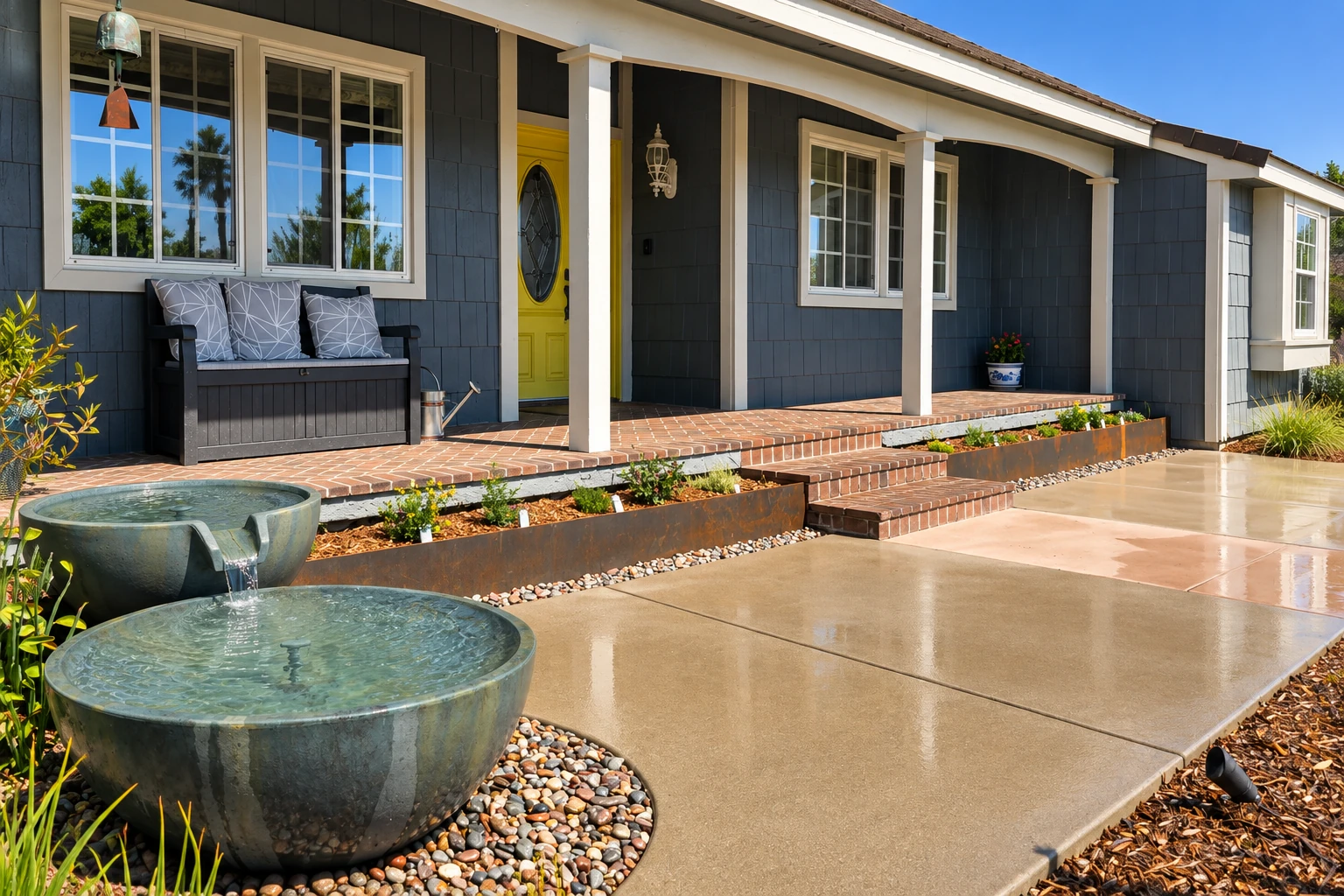
What does it take to build a slab foundation in Pasadena?
Slab foundation building in Pasadena means pouring a concrete slab that sits right on the ground and holds up the house. The slab is either the same thickness all the way across or made thicker in places with ribs or beams. We dig out and pack the subgrade the slab rests on, then build it with the reinforcement your design calls for.
Slab calls usually come when someone's adding a room or a garage or building a new house. The lot is often bare dirt, or it has an old slab that has to come out first. The price moves with the slab's size and thickness, any thickened ribs or beams, the type of reinforcement and how much digging and packing the base needs. The schedule mostly turns on getting the plans approved and the permit in hand. If your plans call for footings or a different base under the house, our foundation installation page covers that. Either way, your written estimate lays out what I'd do and why.
How do you know it's time for a new slab foundation?
Sometimes the plans tell you, and sometimes the old slab does. These are the things homeowners usually notice before they call us about a new slab, and what each one tends to mean.
Your plans for an addition or garage show a slab on the ground, so the concrete comes first.
Cracks in an old slab keep getting wider, which usually means the ground underneath is still moving.
Water pools against the house after rain, which usually means the old slab or the grade falls toward it.
Floors feel uneven or doors start sticking, often because the base under the old slab settled.
The yard cracks open in dry months and swells when wet, a sign of ground that moves under slabs.
The old slab's surface is chipping and dusty, which often points to a pour done in midday heat.
If cracks are widening or water is reaching the house, call now instead of waiting, because the ground usually keeps moving and the job only gets bigger.
What happens when you call us about a slab in Pasadena?
I handle the first visit and the estimate myself, and I'm on site running the job once our crew starts. Here's how a slab foundation goes from your first call to the final walk-through.
Call or send the form
You call (626) 345-7318 or fill out the form, and we get back to you to set a time for me to see the site. Have any plans you've got ready, because the design decides a lot about the slab.
I measure and explain the work
I come out, measure, ask how you'll use the space and walk you through the base, the thickness and the reinforcement I'd use, and why. Then you get a written estimate, so you know the price and the plan before you decide anything.
We settle the permit question
Once you say go, we sort out who's pulling the permit and put that in writing, and we handle the paperwork on the permits we pull. The city's plan approval comes before any digging, so this step usually sets when we can start.
Prep, pour, finish and walk-through
Our crew digs out and packs the base, sets the forms and reinforcement, then pours and finishes the slab while I run the job on site. When it's done, I walk it with you and explain curing, the wait while the concrete hardens before it takes weight.
Get a written estimate for your slab foundation
We reply within one business day to set a time for me to come out, measure and talk it through. The on-site estimate is free and written out, with no obligation.
- Call
- (626) 345-7318
- Hours
- Mon–Fri: 8 AM–11 PM, Sat–Sun: 6 AM–10 PM
Base, drainage and timing under a slab foundation
When a budget gets tight, the base is usually the first thing someone wants to cut, because nobody sees it once the concrete's down. I won't cut it. A slab poured over dirt that was only raked level settles along with that dirt. So we dig out to firm ground and pack the base in layers, the same way we do under a parking lot or a driveway.
Before we form anything, we check where water runs on your lot and set the slab so water doesn't run toward the house or sit against it. On hot days we pour early, because a slab that sets too fast in midday heat can end up with a weak, dusty top that wears out early. Neither of these shows on day one, and both show up later if they're skipped.
Slab foundation questions we hear in Pasadena
How much does a concrete slab foundation cost in Pasadena?
A reinforced concrete slab in the Los Angeles area usually costs about $8 to $14 per square foot. That's the going rate in the area, not our quote. Where your slab lands depends on its size and thickness, any ribs or beams, the type of reinforcement and how much base work the ground needs. I'll give you a written estimate for your slab once I've seen the site.
What causes cracks in a new concrete slab, and is it normal?
Some cracking and curl, a slight warping of the slab, is normal and doesn't by itself mean the work was bad. A national slab design guide says floors with no cracks and no curl aren't realistic, even with the best design and proper construction. I'll tell you that before the pour. We also cut control joints on time. Those are grooves that give cracks a planned place to run, so they don't show up where nobody chose.
How do I choose between rebar, fiber and post-tensioned reinforcement for a slab?
Go with what your design calls for. Plain, rebar, fiber and post-tensioned slabs are each built differently, and I'll walk you through which one yours uses and why. Rebar is steel bar inside the slab that holds it together if it cracks. A post-tensioned slab uses steel cables that are pulled tight to keep the concrete squeezed. A post-tensioning trade group calls that a cost-efficient choice on ground that shrinks and swells, because the squeeze resists the stress when the soil moves. On steadier ground, it can also cut down on cracking and on control joints.
Who reviews and inspects a slab foundation in Pasadena?
Pasadena's Building & Safety Division does plan review and construction inspection for all buildings and structures in the city. You can call the city with permit or inspection questions at (626) 744-4200. The city also requires any contractor who pulls a permit to show a City of Pasadena business license on arrival.
Do I need a soils report for a slab foundation in Pasadena?
The state doesn't require one for a single-family frame house of up to two stories, as long as it isn't part of a development of four or more units, even inside the state's mapped seismic hazard zones. For most other buildings people live or work in, those zones call for a soils study of the site before permits are issued. Local agencies can ask for more than the state does, so check with the city before your plans are final.
Do I need a licensed contractor to pour a slab foundation in California?
Yes, for a job this size. California's exemption for unlicensed minor work tops out at $1,000. It also applies only when the work needs no permit and the unlicensed person employs nobody on the job, and a house slab costs far more than that. The state licensing board has a concrete contractor class for forming, pouring and finishing concrete, and we're licensed and fully insured.
Other foundation and paving work we do
Foundation installation
If your plans call for a different kind of foundation than a slab on the ground, we build that too, starting from firm, packed ground.
Concrete parking lot building
Property owners who need a lot paved for cars and trucks get the same packed base and drainage check we put under every house slab.
Book a site visit for your slab
Call (626) 345-7318 or send our form with your address, the slab size you're planning and any soils report you already have, so I come out ready to talk about your ground.
Mon–Fri: 8 AM–11 PM, Sat–Sun: 6 AM–10 PM