Concrete retaining walls in Pasadena CA - a wall that drains and holds the slope
Slope sliding into the yard or an old wall leaning out? We build poured concrete walls with drainage behind them so the ground stays put.
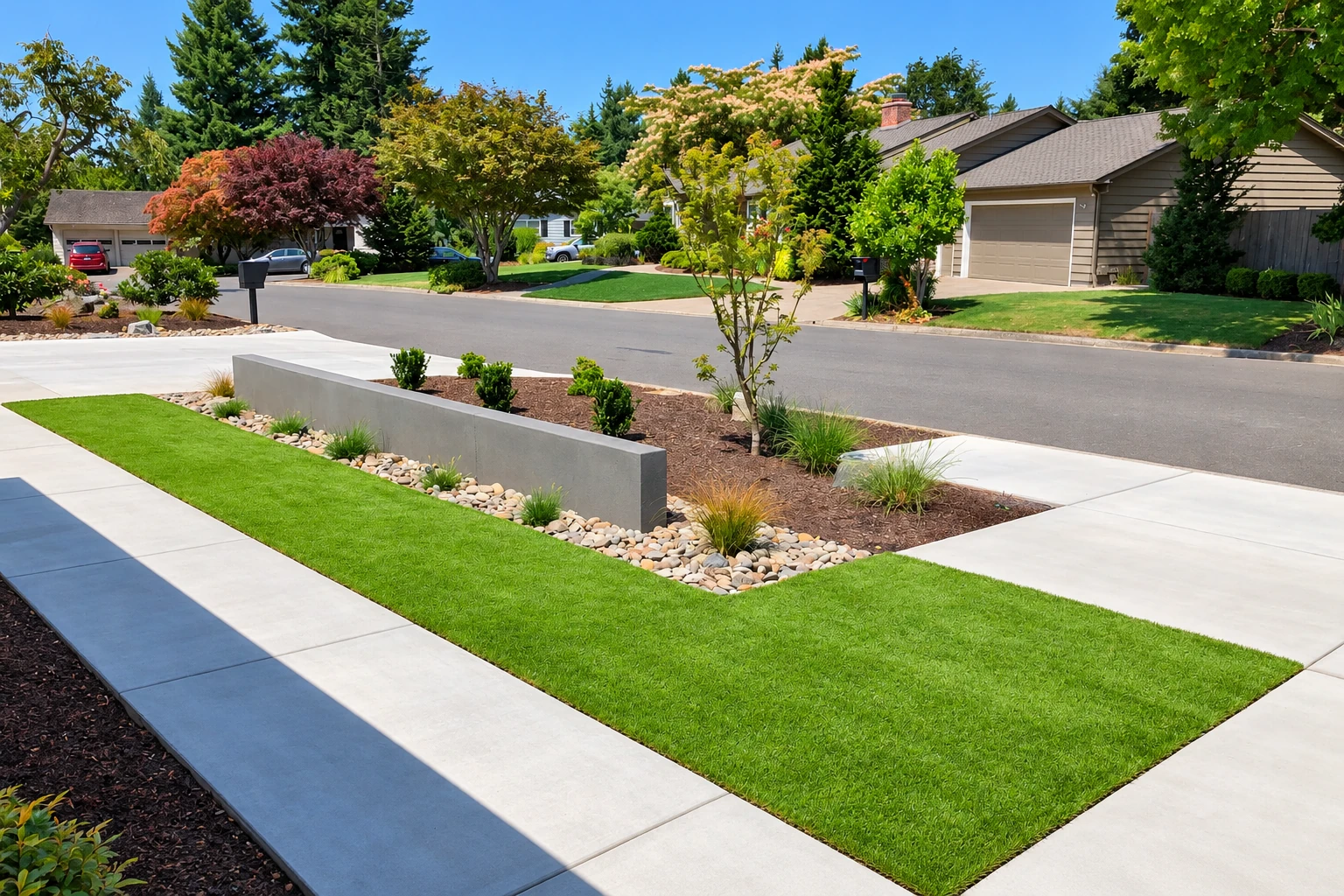
Do you need a concrete retaining wall for your Pasadena slope?
A concrete retaining wall in Pasadena holds back a slope so it stops sliding into your yard. A poured footing keeps the wall from tipping or sliding, and rebar, the steel bars set inside the wall, takes the push of the soil.
Most calls start with a slope creeping into the yard, an old wall that's leaning or a spot where you want flat ground and the hill won't give it to you. The first thing I sort out is whether you need a poured wall at all, because a dry-stacked wall of loose stone or block costs much less and can do the job where the soil doesn't need much holding, while a poured structural wall is the one to build when it does. The price moves with the wall's height and length, how deep the footing goes, how much drainage the site needs and how hard it is to get a crew and a concrete truck to it. The schedule turns mostly on the permit and the digging, and we settle who's pulling the permit before we start. If the wall is going in alongside a pool deck, tell me early, because the two share the same ground and the same water.
How do you know a slope or wall needs work?
Most people call us because something on the slope has started to move or the water isn't going where it should. These are the signs I look for when I walk a yard.
A wall leaning out at the top usually means the soil behind it is winning.
Cracks through the face of a wall that keep getting wider usually mean it's still moving.
A bulge in the middle of the wall often points to water and soil pressure building behind it.
Wet spots or stains on the face after rain mean water is sitting behind the wall with no way out.
Mud and soil washing onto your patio or driveway after a storm mean the slope needs holding back.
A fence, walk or slab at the top of the slope that's tilting usually means the ground is creeping.
If a wall is already leaning or bulging, call now rather than after the next big storm, because more water behind it only adds to the push.
What happens when you call about a retaining wall in Pasadena?
I write the estimate myself and run the job on site, so you deal with the same person from the first visit to the final walk. Here's how a wall goes from your call to done.
Call or send the form
Call (626) 345-7318 or send the form, and we set up a time for me to come see the slope. Tell us roughly how long and how tall the wall needs to be.
I measure and explain the plan
I come out, measure, look at where the water runs and ask what the wall has to hold, then walk you through what I'd build and why. You get a written estimate with the footing, drainage and backfill spelled out, so you can see what you're paying for underneath the part you'll look at.
Settle the permit, then build
Once you say go, we settle the permit question, then our crew digs and forms the footing, sets the steel, pours the wall and builds the drainage behind it. I'm on site running the job the whole way.
Walk the finished wall together
When the backfill is in and the site is cleaned up, I walk the wall with you and show you where the water comes out. Your satisfaction, guaranteed.
Get a written estimate for your retaining wall
Send the form and we'll reply within one business day to set up a visit. I come out, look at the slope and give you a free written estimate, with no obligation to go ahead.
- Call
- (626) 345-7318
- Hours
- Mon–Fri: 8 AM–11 PM, Sat–Sun: 6 AM–10 PM
Footings, steel and drainage in a poured wall
Most walls we build are poured cantilever walls, where the footing runs back under the soil being held, so the weight of that soil helps pin the wall down. When a typical footing would cross onto the neighbor's lot, the footing can reach out on one side only, so a wall right at the property line can still be built this way. I plan the footing around your site, not a stock drawing.
Drainage is part of every wall we bid. That means clean gravel behind the wall, a drain pipe at the bottom to carry water away and weep holes, small openings through the face, so water has somewhere to go besides pushing on the concrete. Nobody sees any of it once the wall is backfilled, and that's why it's the first thing people want to cut. I'd rather build you a plain wall with full drainage than a nicer face with the gravel skimped.
Industry guidance says soil should go back against the wall only once the concrete has gained enough strength or the wall has been braced, and that heavy machines should stay back from the top by at least the wall's height while filling. It's fair to ask any crew how they'll handle both. If the new wall leaves you a level pad, we can plan concrete floor installation for it at the same time so the slab and the wall shed water the same way.
Retaining wall questions from Pasadena homeowners
How much does a concrete retaining wall cost near Pasadena?
A concrete retaining wall in the Los Angeles area usually costs about $20 to $50 per square foot. That's a wide spread and only a rough guide, because height, footing depth, drainage and how easy the site is to reach move it a lot. Your written estimate gives you the figure for your own wall.
Do I need a permit for a retaining wall in Pasadena?
Plan on checking with the city, because the City of Pasadena requires a building permit for most construction projects, and work that's exempt from that may still need a zoning permit. To pull one, a contractor has to show a valid contractor license and a current Pasadena business license. When a wall needs a permit, we put in writing who's pulling it before we start, and we handle the paperwork on the ones we pull.
What causes concrete retaining walls to fail?
Water causes most failures, because water and wet soil build up behind the wall and push on it until it leans or cracks. Every wall should let that water drain down and away through gravel backfill or drainage blankets and drain pipe, which is why the drainage described above goes in every bid.
How do I keep my retaining wall's weep holes from clogging?
Check them after storms and clear out whatever's in them, because weep holes only help while water can get through. A research report on wall drains found they often clog from poor backfill, plants, animals or trash, so keep plants trimmed back from the openings.
Are there extra rules for a retaining wall on a hillside lot in Pasadena?
Yes, hillside lots can bring two more limits. When a project needs a hillside development permit, the city lists retaining walls among the work that needs a soils engineer's report, and its hillside grading rules cap walls built for cuts or fills at 8 feet total, counting existing and new walls together. If your lot sits on a hillside, tell us when you call so I can plan the wall's height around it.
Can I build a retaining wall myself in Pasadena?
You can, because Pasadena lets property owners get permits and do the work themselves, but if you then hire unlicensed workers you have to carry workers' compensation insurance for them. The city's Permit Center highly recommends hiring a licensed contractor. We're licensed and fully insured, and I'm glad to look at the slope even if you're still deciding.
Concrete work that often goes with a wall
Concrete floor installation
If cutting into the slope leaves you a flat pad, a concrete floor can turn it into a workshop, shed base or storage area that stays dry.
Concrete pool decks
A pool on a sloped yard often needs a wall and a deck, and planning both together keeps deck water from soaking the soil behind the wall.
Send us photos of your slope
Call (626) 345-7318 or send the form with a few photos of the slope and whether your lot is on a hillside, so I come out already knowing what to check.
Mon–Fri: 8 AM–11 PM, Sat–Sun: 6 AM–10 PM