Concrete sidewalk building in Pasadena CA - a walk planned around tree roots
A cracked walk with lifted edges you trip over? We build a new one with the base, joints and tree roots planned before the pour.
What goes into a new concrete sidewalk in Pasadena?
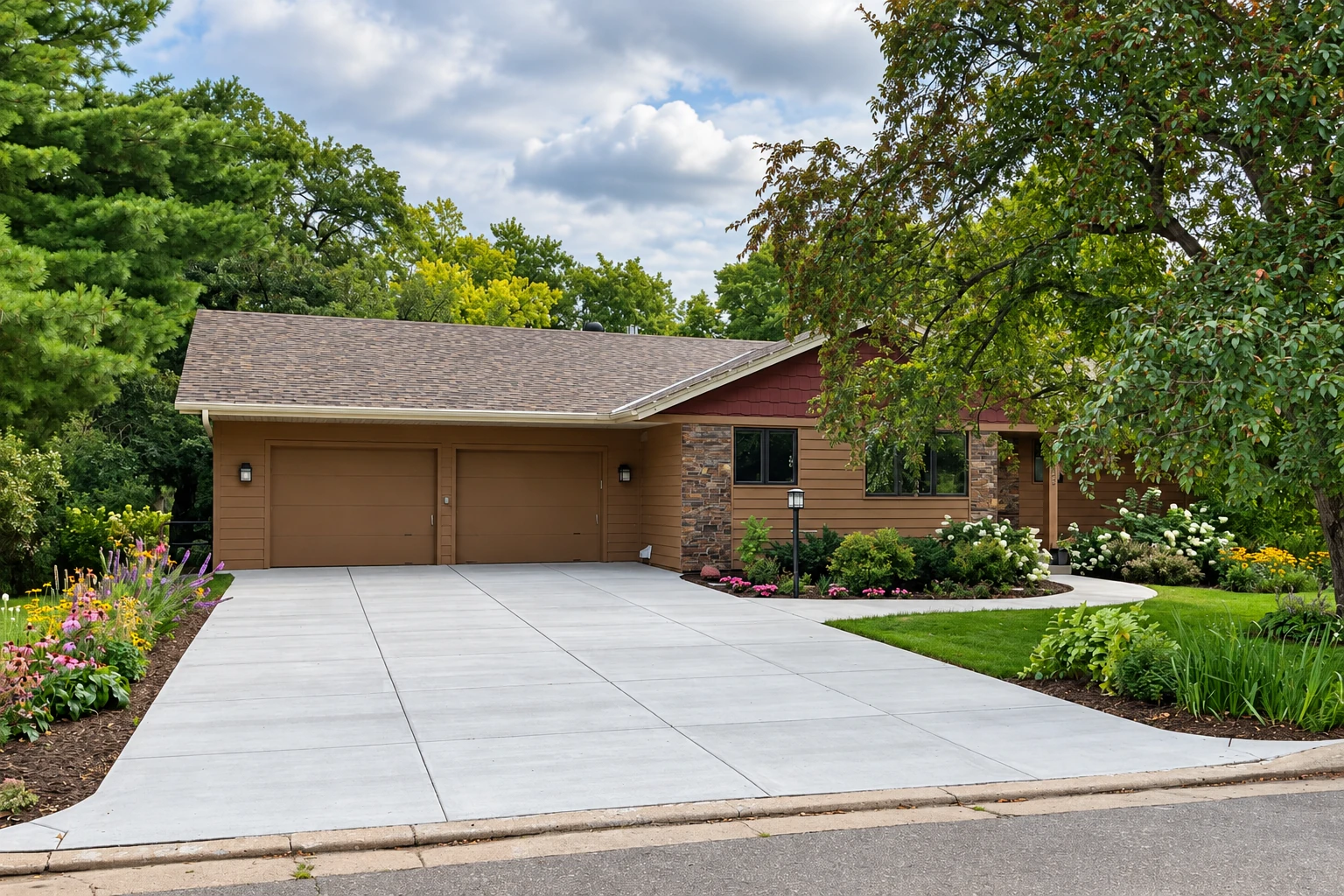
Concrete sidewalk building in Pasadena means we dig out the old walk or the dirt, pack a solid base, then form, pour and finish a new walk that sits flat and sheds water away from your house. It's flatwork, the trade's name for walks, driveways and patios, and most of what makes it last happens before any concrete shows up.
Most people call us because the old walk has heaved, cracked or become a trip hazard, or because there's never been a walk and the lawn has a worn path through it. The price moves with the size of the walk, whether old concrete has to be broken out and hauled away, how much digging and base the ground needs, nearby tree roots and the finish you pick. The schedule turns on the permit question, the weather and curing, the wait before new concrete can take foot traffic, and my written estimate puts your price on paper. We're licensed and fully insured, and you can look up any contractor with the state licensing board's License Check. If the walk runs to a garage whose floor is in rough shape too, I can look at garage floor concrete on the same visit.
How do you know your walk needs replacing?
Most sidewalks show they're failing long before they break apart. These are the things I see most on estimate visits, and what they usually say about what's going on under the concrete.
A slab edge lifted near a tree usually means roots are pushing up from underneath.
Cracks that keep getting wider often point to ground moving under the walk or a thin base.
Water that pools on the walk after the sprinklers run means it was never sloped to drain.
A walk that tilts toward the house sends water at your foundation instead of out to the yard.
A dusty, flaking top that wears through usually means it was poured or finished in the midday heat.
Sections that sank below their neighbors usually sat on dirt that was raked level, not dug out and packed.
If an edge has lifted enough to catch a foot, call rather than wait, because the roots under it keep growing and the edge keeps rising.
What happens after you call about a new walk?
From the first call to the final walk-through, you deal with me on site. Here's how a sidewalk job runs with us, and what you'll have in hand before you decide anything.
Call us or send the form
Call (626) 345-7318 or use the form, and we set up a time for me to look at the walk. Tell us roughly where it goes and what's there now, whether that's lawn, dirt or a cracked old walk that has to come out.
I measure and check the site
I come out myself, measure, check the trees, the slope and where water runs, and ask how you use the walk. Then I walk you through what I'd do and why, and your written estimate spells out the base, the finish and the price, so nothing is left to guess.
We prep, form and pour
Once you say go, we settle the permit question first, then dig out, pack the base, set the forms and pour. Our crew does the work, and I'm on site running the job.
We finish and walk it together
We finish the surface, cut the joints, clean up and leave the walk to cure before anyone uses it. Then I walk the job with you so you see exactly what you're getting.
Get a written estimate for your new concrete walk
Send the form and we'll reply within one business day to set up a visit. I come out, measure and give you a free written estimate on site, with no obligation to go ahead.
- Call
- (626) 345-7318
- Hours
- Mon–Fri: 8 AM–11 PM, Sat–Sun: 6 AM–10 PM
Base, steel, joints and the pavers question
The base is where I won't cut corners. It's hidden the day we pour, so it's the first thing people want to trim from the budget, but a walk on raked dirt settles with the dirt and no finish can save it. I'd rather spend your money digging out the subgrade, the ground the walk sits on, and packing a firm base, then keep the top a simple broom finish, the light texture that gives shoes grip when it's wet.
On clay that swells and shrinks, steel reinforcing bars are generally recommended to help the slab hold together if the ground heaves or settles, so we talk that through for walks on that kind of ground. We cut control joints, grooves that give the concrete a planned place to crack, on time, and we schedule pours around the heat, because concrete that dries too fast ends up with a weak, dusty top. If you want color or a pattern, that's decorative concrete built on the same base.
Sometimes poured concrete isn't the right answer. When the ground moves, pavers can shift too, but they can be lifted and reset fairly easily, where a cracked slab has to be cut out. If your spot sits right against a big tree, I'll tell you honestly at the estimate if pavers make more sense, even though concrete is what we build.
Concrete sidewalk questions from Pasadena homeowners
How much does a concrete sidewalk cost near Pasadena?
A new concrete sidewalk in the Los Angeles area usually costs about $5.50 to $11 per square foot, which is the going market range, not our price. Where your walk lands depends on breaking out old concrete, how much base the ground needs, tree roots and the finish. I come out, measure and give you your own figure in writing.
Can clay soil crack a new sidewalk?
Yes, clay soil can swell as it soaks up water from sprinklers, rain or other sources, and it pushes hard enough to lift buildings and crack concrete. On clay ground, a walk has to be built for soil that rises when it gets wet, so we check the ground at the estimate and plan the base, steel and joints around what we find.
How do I protect a new concrete walk from tree roots?
Plan for the roots before the pour, not after the walk lifts. In one study on clay loam soil, root barriers worked best for walks near trees, and foam or gravel under the walk also worked very well by steering roots deeper. A national tree group adds that wide planting strips, the right tree, tree wells and better-built walks all help prevent trouble. Before we pour, I look at what's growing nearby, because roots cause a lot of the damage we get called to fix.
Who handles sidewalk permits in Pasadena?
The city's Public Works permitting office handles permits and inspections for all work in the public right of way, the public land along the street. Questions about whether your sidewalk work needs a permit go to pw-permits@cityofpasadena.net. When a job needs one, we sort out who's pulling it before we start and put that in writing, and we handle the paperwork on the ones we pull. Public Works also lists a Sidewalk Repair Reimbursement Program, so it's worth asking about while you have them.
What causes a concrete sidewalk to crack and lift?
Most cracked, lifted walks come down to the ground moving underneath, from tree roots, wet clay or a base that was raked level instead of dug out and packed. Joints cut late or skipped add cracks in places nobody chose, so ask any contractor where the control joints will go before you hire them.
Do you build concrete sidewalks in cities near Pasadena?
Yes, we're based in Pasadena and build walks across the cities around it, including Altadena, South Pasadena, San Marino, Sierra Madre, Arcadia and Glendale. We see the same calls from city to city, older walks pushed up by trees and slabs that sank on a thin base, and we build them the same way everywhere.
Related concrete work near your walk
Garage floor concrete
If the walk leads to a garage with a cracked or sunken floor, it often makes sense to look at both while our crew is already set up.
Decorative concrete
When a plain broom-finished walk feels too bare for the front of your house, color and pattern can tie it to the entry, patio or driveway.
Get your new walk planned before the pour
Call (626) 345-7318 or send the form with the walk's rough length and width, any trees nearby and where the old walk cracked, so I show up ready to talk about your spot.
Mon–Fri: 8 AM–11 PM, Sat–Sun: 6 AM–10 PM